If you’ve ever shopped for CNG booster compressors, you’ve probably noticed that most suppliers (myself included) don’t just pull specs out of thin air. Every unit we build has to check against a set of domestic standards—non-negotiable rules that keep operators safe, make units reliable, and ensure they work as promised for decades. As someone who’s spent 12 years selling CNG boosters out of my small but tight-knit shop, I’ve learned that skipping these standards isn’t just a technical mistake; it’s a liability for us and a risk for every customer. Let’s break down what those domestic standards actually mean, how they shape the compressors we ship, and why you should never buy a unit that doesn’t adhere to them. CNG Booster Compressor
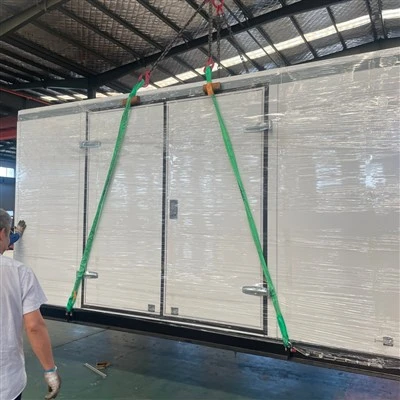
First, let’s get clear on what a CNG booster compressor does, for anyone who’s new to the space. CNG stands for compressed natural gas, and before that gas gets pumped into a vehicle’s fuel tank or stored in a utility pipeline, it often needs to be pressurized higher—usually from a low of 200 psi (for raw wellhead gas) up to 3,600 psi for vehicle fuel, or even 4,500 psi for heavy-duty trucks. A CNG booster takes that low-pressure input, multiplies it, and delivers it at the exact pressure needed. The standards for these units aren’t arbitrary; they were written after decades of testing, accidents, and real-world use to prevent leaks, explosions, and equipment failure.
In the U.S., the primary governing body for pressure equipment is the American Society of Mechanical Engineers (ASME), and the code that applies specifically to natural gas compressors—especially those used in stationary applications, which is where almost all our booster compressors live—is ASME PTC 10. Wait, no, hold on. Let me correct that. PTC 10 is for compressors in general, but the specific code for pressure vessels and compressor components (like the cylinders that hold high-pressure gas) is ASME Section VIII, Division 1. That’s the bread and butter. Every pressure-containing part of a CNG booster—those big metal barrels that hold the compressed gas during compression—has to be designed, fabricated, stamped, and tested to ASME VIII. I can’t overstate how important that is. A pressure vessel that doesn’t meet ASME VIII can rupture, spraying shrapnel and releasing highly flammable natural gas. We have a sign in our shop that says “ASME Stamped = Peace of Mind” because we’ve seen what happens when corners are cut. A few years back, a customer bought a cut-rate booster from an overseas supplier that had a non-ASME vessel; it failed during a routine pressure test, and they had to shut down their station for three months while we replaced it. That’s the kind of cost you can’t put a price on.
Next, there’s the National Fire Protection Association’s NFPA 52, which is specifically for vehicular natural fuel systems. This code covers everything from how compressors are installed in a fueling station to their electrical components, because natural gas is explosive when mixed with air at concentrations between 5% and 15%. NFPA 52 requires that all electrical parts of a CNG booster—motors, control panels, wiring—be rated for Class I, Division 2 hazardous locations. What does that mean? It means those parts are sealed so if a small gas leak does happen, it can’t ignite. I’ve had suppliers try to sell us motors that aren’t rated for Class I, Division 2, claiming they “work fine for natural gas.” But when the NFPA inspector comes for a routine check (and they do come—often), that unit gets shut down immediately. We refused to stock those motors years ago, and it’s saved us more headaches than I can count. Another part of NFPA 52 covers pressure relief valves, which are non-negotiable on every booster. If the compressor overpressurizes, the relief valve has to open and release gas safely before the vessel fails. NFPA 52 dictates exactly what pressure the relief valve is set to, how it’s tested, and where it has to be mounted. We install 150% of maximum working pressure relief valves on every one of our units, even though that’s a little more expensive, because we follow NFPA rules strictly.
Then there’s the Department of Transportation’s (DOT) regulations, specifically 49 CFR Part 192, which covers transportation of natural gas pipelines. Wait, but that’s for pipelines, right? It also applies to any CNG components that are used in conjunction with pipeline systems, like booster compressors that feed pressure into pipelines. 49 CFR Part 192 sets standards for the maximum allowable operating pressure (MAOP) of piping, fittings, and connections. For example, if a booster is feeding into a pipeline with a MAOP of 3,600 psi, every pipe and connection in the booster has to be rated for at least that pressure, plus a safety factor. We use only forged steel fittings on our compressors, not copper or plastic, because 49 CFR prohibits materials that can fail under pressure or from natural gas corrosion. A lot of cheap boosters use cast fittings, but cast steel has tiny defects that can lead to cracks over time. DOT’s 192 code catches that, and we stick to the rules to make sure our units don’t become a hazard on someone’s pipeline system.
I should also mention the Compressed Gas Association (CGA) standards, because CGA has specific guidelines for CNG compressors that work alongside ASME and NFPA. CGA Standard V-1 is the one most relevant here; it covers the design, manufacture, and testing of CNG equipment, including boosters. CGA V-1 requires that every compressor undergo a full load test before it leaves the factory, to make sure it delivers the exact flow rate and pressure it’s rated for, and that it doesn’t have any hidden leaks. When a customer buys a booster from us, we send them a test certificate signed by our lead technician, proving we ran that test to CGA V-1 specs. I’ve had competitors tell me “testing is a waste of time” and cut corners on that step, but if a customer installs a compressor that only puts out 3,000 psi instead of the promised 3,600, that’s a problem for their whole fueling station. CGA V-1 ensures that doesn’t happen.
Wait, what about standards for portable CNG boosters? A lot of our customers are small fleets or farmers who need a portable unit to fill their trucks or equipment at remote sites. For those, we also follow Occupational Safety and Health Administration (OSHA) standards, specifically OSHA 1910.110, which covers storage and handling of liquefied and compressed gases. OSHA requires that operators have proper training on CNG boosters, that units have emergency stop buttons, and that they’re marked with clear pressure and hazard labels. Every portable booster we sell has a big red E-stop button within arm’s reach of the operator, and we provide a free OSHA-compliant training manual with every unit—because we don’t just sell a compressor; we help our customers stay compliant with all federal and state rules.
Let’s talk about a common misconception I run into all the time. Some buyers ask if international standards like ISO apply to U.S.-market CNG boosters. The short answer is, only if you want to, but domestic standards are mandatory. ISO is a global set of guidelines, but U.S. regulators (ASME, NFPA, DOT, OSHA) don’t recognize ISO as a substitute for their own standards. For example, an ISO-rated pressure vessel won’t pass ASME Section VIII testing, because ASME has stricter requirements for weld testing and material quality. We’ve seen overseas manufacturers try to pass off ISO-compliant boosters as U.S.-ready, but they get rejected during the first inspection. That’s why all our units are built exclusively to U.S. domestic standards, tailored to work with American regulations and operating conditions.
What about state-specific standards? For the most part, U.S. CNG rules are consistent across states, but some have additional requirements. California, for example, has stricter emissions standards for compressors than the EPA, because of its climate goals. Our California-spec boosters include low-emission motors that meet the California Air Resources Board (CARB) standards, which add a little to the cost but are required to sell units in the Golden State. We keep track of every state’s updates to their codes, because one of our biggest customers is a chain of fueling stations in Texas that needs high-pressure units, and another is a fleet in Oregon that follows CARB’s emission rules. Being a local supplier (we’re based in Ohio, which is a big hub for natural gas infrastructure) means we’re on top of every change, so our customers don’t have to worry about being non-compliant.
Now, you might be wondering what this means for you as a buyer. If you’re looking for a CNG booster compressor, here’s what to check: first, ask for ASME Section VIII stamps on all pressure vessels. If a supplier can’t show you that stamp, walk away. Second, make sure the unit’s electrical parts are rated Class I, Division 2 per NFPA 52. Third, ask for a CGA V-1 test certificate, proving the compressor was tested at full load before shipping. And finally, confirm that it meets any state-specific rules, like CARB in California.
I’ve been in this business for 12 years, and I’ve met too many people who cut corners on standards to save a buck. Those units end up costing more in repairs, inspections, and fines than a compliant unit would have in the first place. Last year, we had a customer who bought a cheap non-compliant booster to save $5,000; a gas leak went undetected because the relief valve was undersized, and the unit burned down part of their fueling station. They ended up paying $100,000 in repairs and lost revenue, plus a $25,000 OSHA fine. That’s the kind of story that sticks with you.
At the end of the day, domestic standards for CNG booster compressors aren’t just red tape—they’re designed to keep people safe, keep equipment running, and keep businesses from making costly mistakes. Every stamp, every test, every rule we follow is there because someone, somewhere, learned a hard lesson.
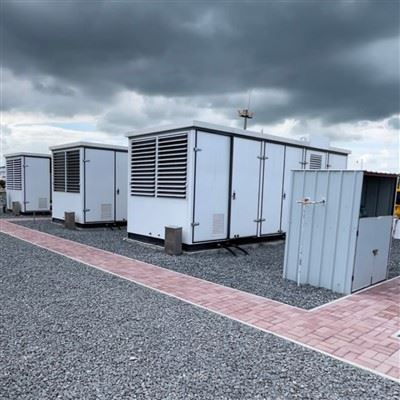
If you’re in the market for a CNG booster compressor, we can help you build a unit that meets all U.S. domestic standards, tailored to your specific needs—whether that’s a small portable unit for a farm, a high-pressure unit for a heavy-duty truck fleet, or a low-emission unit for a California fueling station. We don’t cut corners, we test every unit, and we provide all the documentation you need to pass inspections. Reach out to us to discuss your requirements, and we’ll help you find the right compressor for your operation.
CNG Daughter Station References
ASME Boiler and Pressure Vessel Code, Section VIII, Division 1
NFPA 52, Standard for Vehicular Natural Gas Fuel Systems
49 CFR Part 192, Transportation of Natural Gas and Other Gas by Pipeline: Minimum Federal Safety Standards
Compressed Gas Association Standard V-1, Compressed Natural Gas (CNG) Systems for Vehicular Fuels
OSHA 29 CFR 1910.110, Storage and Handling of Liquefied Petroleum Gases and Compressed Gases
California Air Resources Board (CARB) On-Road Heavy-Duty Engine and Vehicle Standards
Qingdao Lenado Intelligent Equipment Co., Ltd.
Qingdao Lenado Intelligent Equipment Co., Ltd. is one of the most experienced CNG booster compressor manufacturers and suppliers in China. We have world-leading production equipment and strong manufacturing capabilities. Please rest assured to wholesale bulk customized CNG booster compressor from our factory.
Address:
E-mail: genkegasstation@163.com
WebSite: https://www.cnggasstation.com/
